


What Florida Business Owners Need to Know About Commercial Roof Maintenance
- Jason Hale
- Dec 5
- 5 min read

Running a business in Florida means dealing with some of the most challenging weather conditions in the country. Your commercial roof takes a beating from intense heat, torrential rains, hurricanes, and year-round humidity. If you're a business owner, property manager, or facilities director, understanding commercial roof maintenance isn't just smart: it's essential for protecting your investment and avoiding costly surprises.
Let's face it: most business owners don't think about their roof until something goes wrong. But by then, a simple maintenance issue can turn into a major expense that impacts your bottom line. The good news? With the right knowledge and approach, you can keep your commercial roof in excellent condition while avoiding the headaches that come with emergency repairs.
Why Florida Commercial Roofs Face Unique Challenges
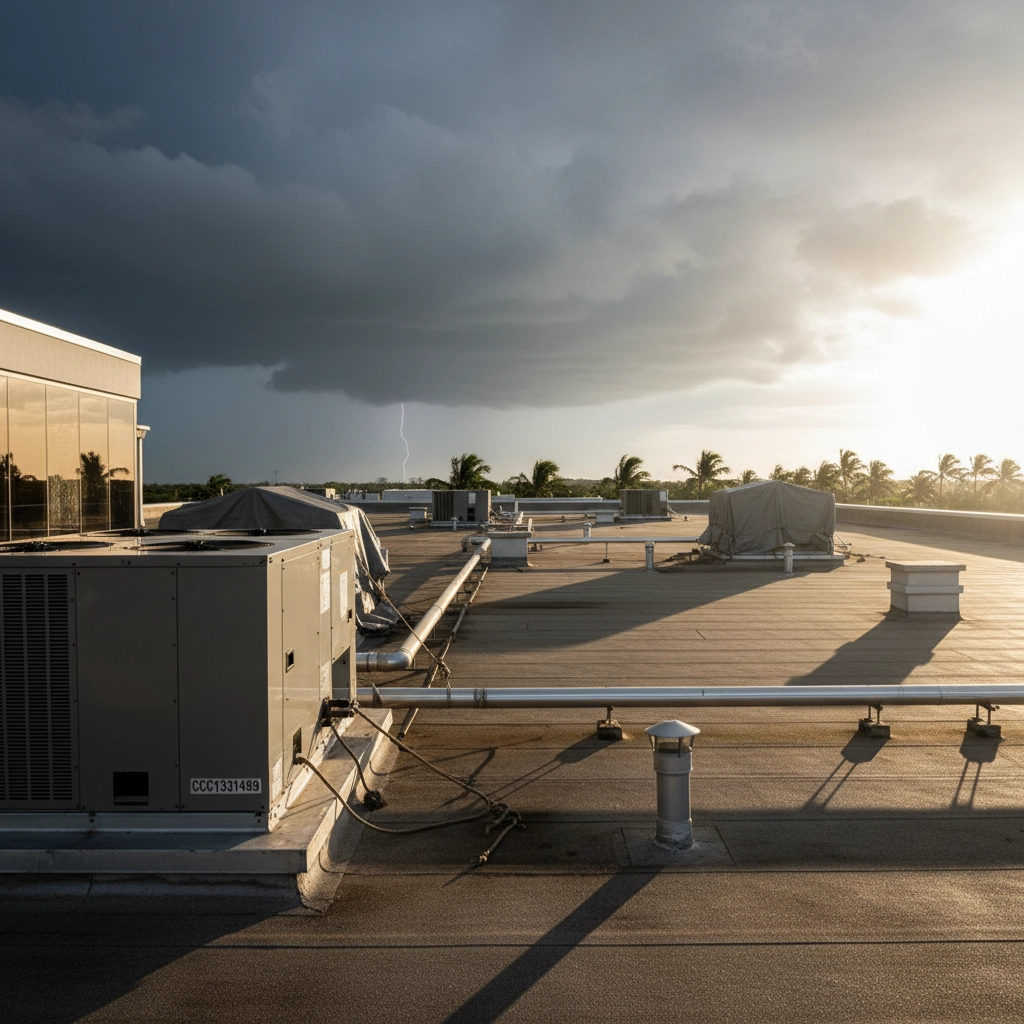
Your commercial roof in Florida works harder than roofs in most other states. The combination of intense UV exposure, sudden temperature changes, heavy rainfall, and hurricane-force winds creates the perfect storm for roofing problems. Add in Florida's year-round humidity, and you've got conditions that can accelerate wear and promote mold growth.
Unlike residential roofs, commercial roofs are typically flat or low-slope, which means water drainage becomes even more critical. Standing water after a storm can cause serious damage in just 48 hours, leading to membrane deterioration, structural issues, and costly interior damage to your business operations.
The Florida 25% Rule: What Changed and Why It Matters
Here's something that could save you thousands of dollars: Florida's "25% rule" got a major update in May 2022 that many business owners still don't know about. Previously, if more than 25% of your roof needed repairs, you had to replace the entire roof: even if the rest was in good condition.
The new rule is much more business-friendly. If your remaining roof complies with the 2007 Florida Building Code or later versions, you can now focus repairs only on the damaged sections rather than replacing everything. This change can save businesses tens of thousands in materials and labor costs.
However, there's an important catch: if your commercial building was constructed before March 1, 2009, you may still need to follow the old rule requiring full replacement when damage exceeds 25%. Knowing which rule applies to your property is crucial for budgeting and planning.
Your Commercial Roof Inspection Schedule
The foundation of smart roof management is regular inspections. Your commercial roof should be professionally inspected twice per year: typically in spring and fall: plus always after major weather events like hurricanes or severe storms.
These inspections aren't just quick visual checks. A thorough inspection should evaluate:
Roof membrane condition (TPO, modified bitumen, metal, etc.)
Water intrusion signs or mold development
Drainage system performance and debris buildup
Flashing and sealant integrity around penetrations
Overall compliance with current building codes
Regular maintenance extends the life of commercial flat roofs by 25-30%, which translates to significant cost savings over time. More importantly, documented inspections provide the paper trail you need for insurance claims if storm damage occurs.
Essential Maintenance Tasks You Can't Ignore
Debris and Drainage Management
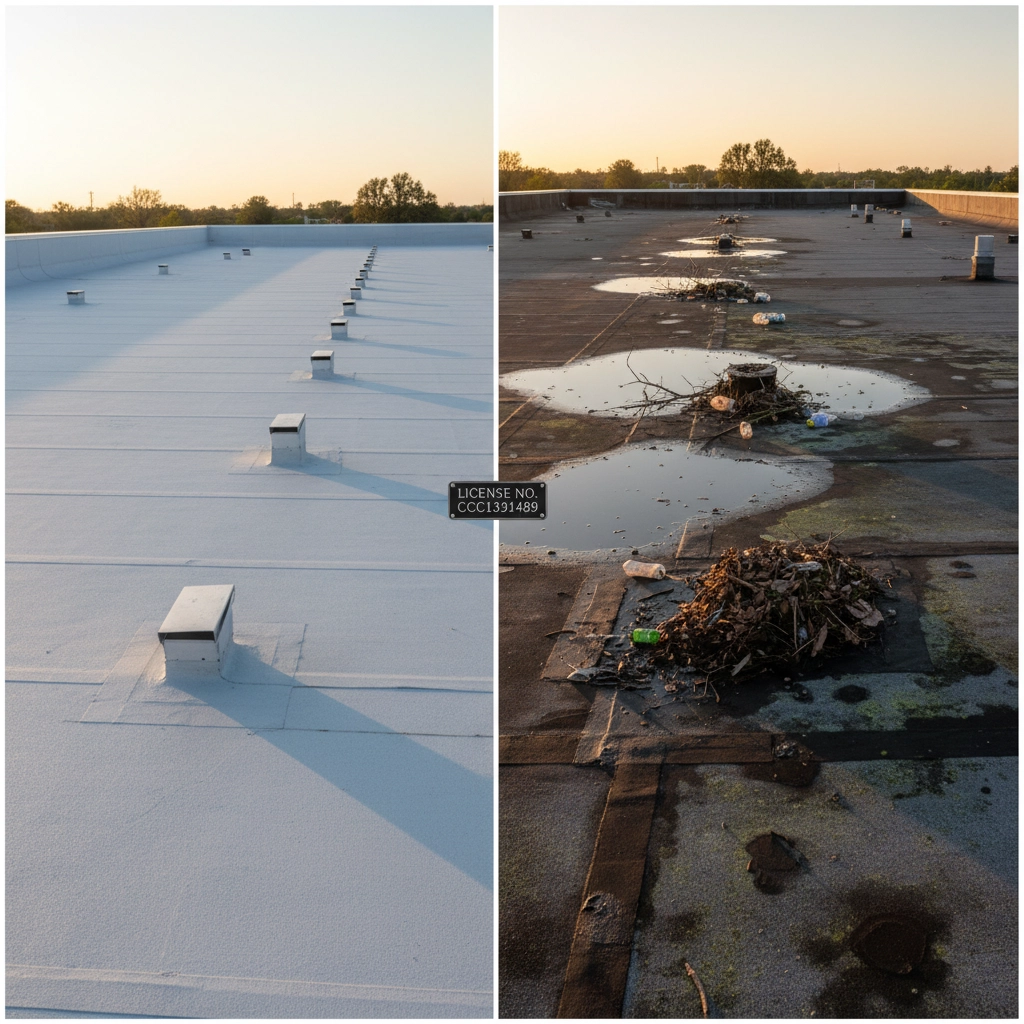
Your first priority should always be keeping water moving off your roof. Remove leaves, branches, and debris at least twice yearly and immediately after any storm. Florida's frequent afternoon thunderstorms can deposit surprising amounts of debris that blocks drainage systems.
Standing water is your roof's worst enemy. Any water remaining on your roof for more than 48 hours can cause rot, mold, and accelerated membrane deterioration. In Florida's humid climate, these problems develop faster than in other regions.
Gutter and Drainage System Care
Clogged gutters don't just cause roof problems: they can damage your building's foundation and create flooding issues that interrupt business operations. Keep all gutters clean and free-flowing, especially before peak storm season arrives.
Make sure both primary drains and emergency overflow systems are functioning properly. Florida building codes require secondary drainage mechanisms, and these systems must be tested regularly to ensure they'll work when you need them most.
Penetration Points and Sealants
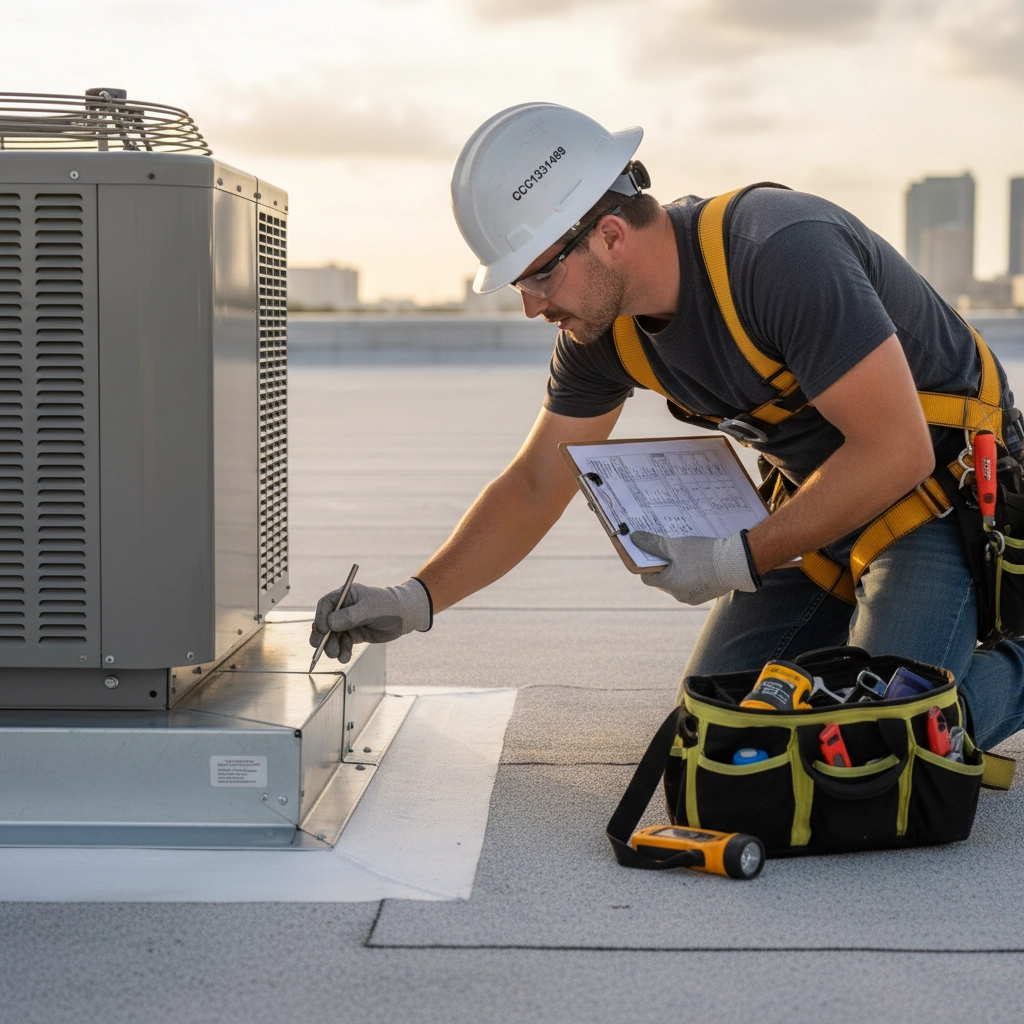
HVAC units, vents, and other roof penetrations are common failure points where water intrusion occurs. Re-seal around these areas annually, and inspect them more frequently during your routine maintenance checks.
Don't overlook less obvious penetration points like satellite dishes, sign mounting hardware, or access hatches. These areas often get forgotten until they start leaking.
Warning Signs That Demand Immediate Attention
As a business owner, you need to know the early warning signs that indicate your roof needs professional attention:
Interior warning signs:
Water stains on ceilings or walls
Musty odors that could indicate mold
Increased energy bills from poor insulation performance
Visible sagging in ceiling areas
Exterior warning signs:
Ponding water that doesn't drain within 48 hours
Cracked or bubbling roof membrane
Loose or missing flashing around equipment
Excessive granule buildup in gutters or drainage areas
The key is addressing these issues quickly. What starts as a minor problem can rapidly escalate into a major expense that impacts your business operations.
Choosing the Right Materials for Florida's Climate
Not all roofing materials perform equally in Florida's challenging environment. When it's time for repairs or replacement, material selection can significantly impact your long-term maintenance costs.
TPO and modified bitumen roofs typically last 20-30 years with proper maintenance in Florida's climate. These materials handle UV exposure well and provide good energy efficiency.
Metal roofing systems can last up to 40 years and offer excellent hurricane resistance, making them increasingly popular for commercial applications.
Traditional shingle systems generally last 15-20 years but may not be the best choice for flat or low-slope commercial applications.
Consider that many insurance companies limit coverage for roofs older than 15 years, regardless of their actual condition. This means you might need to plan for replacement sooner than the roof would naturally fail, depending on your insurance policy terms.
Building Code Compliance: What You Need to Know
Florida's commercial roofing codes are updated every three years, and staying compliant is non-negotiable. Key requirements include:
Minimum slope: ¼ inch per foot to prevent water pooling
Dual drainage systems: Primary drains plus emergency overflow mechanisms
Fire rating: Class A fire-resistant materials required
Insulation standards: Minimum R-20 insulation requirements
Proper permitting: Required for all structural roofing work
Working with unlicensed contractors or using non-compliant materials can result in failed inspections, insurance claim denials, and costly do-over work. Always verify that your contractor holds current CCC licensing and understands Florida's specific requirements.
When to Call the Professionals
While your maintenance team can handle routine cleaning and basic visual inspections, certain tasks require professional expertise:
Detailed structural assessments
Membrane repairs or replacement
Sealant application around critical areas
Post-storm damage evaluation
Insurance claim documentation
At Simpson Construction and Roofing, we understand the unique challenges Florida commercial properties face. Our team provides comprehensive roof inspections, emergency repairs, and planned maintenance programs designed specifically for Florida's climate conditions.
The Bottom Line: Prevention Pays
Smart commercial roof maintenance isn't an expense: it's an investment that protects your business operations, reduces long-term costs, and provides peace of mind during Florida's intense storm seasons.
Regular maintenance, proper documentation, and working with experienced professionals like Simpson Construction and Roofing can extend your roof's lifespan significantly while keeping you compliant with insurance requirements and building codes.
Don't wait for a leak to discover your roof needs attention. Contact Simpson Construction and Roofing today for a free commercial roof inspection. Our experienced team will assess your current roof condition, identify potential issues before they become problems, and develop a maintenance plan that fits your budget and business needs.
Your business deserves a roof that works as hard as you do. Let us help you protect your investment with professional maintenance services designed for Florida's challenging climate.
Comments